IN DEFENSE OF SACRED SPACE IN JUDAISM
What follows is an excerpt from the last session of a course I am teaching on indigenous Judaism before the Babylonian exile. There’s still time to join the class, even though we’ve started.
Sacred space and sacrifices/offerings are hugely important in Judaism. I’m going to start with a defense of sacred space against one of the foremost critics of the importance of sacred space in Judaism, Rabbi Abraham Joshua Heschel. Then I am going to talk about the mishkan, (the portable tabernacle), the first Temple, the bamot (high places).
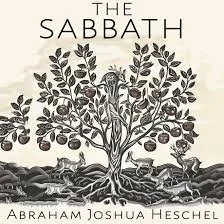
This rejection of place can be found in the thought of Dr. Rabbi Abraham Joshua Heschel (1907-72). Heschel was born in Poland, descended from an important lineages of Hasidic Rebbes on both maternal and paternal lines. He earned a doctorate from the university of Berlin in the 1930’s writing about the prophets. He was arrested in Germany by the Nazis, deported to Poland and his influential friends secured him a visa to the United States, arriving in April 1940. He was a highly revered and influential thinker both for his orientation towards social justice and his emphasis on wondering and faith. I think it fair to say that he was one of the most influential thinkers in Judaism post the Holocaust.
I’m going to look at the introduction to his book The Sabbath. The book begins with an attack on the idea that a deity could be associated with a particular place. This is important because I believe Heschel is expressing a certain tension around having a UNIVERSAL TRUE GOD OF THE ENTIRE WORLD and privileging one particular place over any other.
Heschel continues with a denigration of mountains and rivers as mere things (pp.4-6). He contends that pantheism is a religion of space (p.4). Heschel then argues “To Israel, the unique events of historic time were spiritually more significant than the repetitive processes in the cycle of nature, even though physical sustenance depended on the latter.” (p.7) and “Judaism is a religion of time, aimed at the sanctification of time.” (p.8). Finally, “Six days a week we live under the tyranny of things of space; on the Sabbath we try to become attuned to holiness in time. (p.10, italics in original.)
I would not deny the importance of sacred time in Judaism or in general. But I would argue vociferously both for the general importance of sacred space and for its place in Judaism both before the Babylonian exile and since. Herzl, the founder of political Zionism, at one point was considering a plan to settle the Jews of Europe in Uganda. The delegates to the world Zionist Congress, who were mostly stoutly anti-religious, rejected it out of hand because they wanted to return to the land they considered sacred, the holy land of Israel.
I am emphatically opposed to any view that sets time against space and privileges time over space as something inert. I believe that land and mountains and rivers are alive. I believe that if we want to reclaim a sense of being indigenous, that sense must include an uplifting of local sacred space. Maybe it doesn’t need to valorize the land of Israel, but any spirituality that doesn’t valorize sacred space is an ungrounded spirituality. Our being connected to the web of all life happens both in time and in space.
It is easy to lose sight of sacred space in our mobile modern lives. Almost all of us do not live somewhere where we go to particular holy areas to celebrate rituals, and none of us live our lives surrounded by widespread agreement that certain places are sacred; the Black hills may be sacred ground for the Sioux, but they are a tourist destination for far more people. The place where I did my vision fast in Vermont was not far from a snowmobile trail. Modern life.
We need to re-find that connection, both within and outside of our human selves.