The class that I called “Priests, Prophets and Healers” in my Indigenous Judaism pre-Babylonian exile was really eye opening for me. Let me share both some general comments and a few specifically about me.
There’s always a conundrum in using categories, particularly in looking at cross cultural phenomena. On the one hand, categories are necessarily abstract and non native. Once I use the term “prophet” as a translation of the Hebrew “navi”, I’m already entering into the realm of abstraction. It becomes even more complicated when I attempt to understand what Isaiah, Miriam, Devorah, Samuel and Elijah all have in common because they are all called “neviim” (the plural of navi). Then there’s the question of how that all compares and applies to others we label prophets, whether that is Muhammad, Handsome Lake of the Iroquois or Martin Luther King. Then there are people who we don’t call prophets, but sure sound like prophets (find some examples). Lastly, there’s the complication of the traditional Jewish view that prophecy ended some more than 2,000 years ago, and it’s complicated.
Some people therefore deny the possibility or validity of using such cross cultural categories as “prophet.” But I’ve always rejected that view because without that level of abstraction, I don’t know how we can learn anything from anybody who is outside of our culture or perhaps even inside of it. I think categories are absolutely necessary for any kind of coherent thought process. So I use them. And this class was a perfect example of how they can be problematic. What do Isaiah, Miriam, Devorah, Samuel and Elijah all have in common that our ancestors viewed them all as prophets?
A number of people in the class wanted to lead rituals, particularly ones for women. This is basically priestly work. However, they wanted something different than the emphasis on doing it 100% the right way was the hallmark of Leviticus, is characteristic of the orthopraxic orientation of Judaism as exemplified by the laws of Kashrut and much prayer—where what counts is only that you do all the externals right, and the interior doesn’t really matter. This is what is held in common cross culturally. When I first read Leviticus in detail, I remember thinking that I’ve read this before when I was reading the instruction manuals given to Japanese priests performing esoteric Buddhist rituals or Brahmin rituals.
Here comes the problem of categories. So if leading rituals is basically priestly work, but you don’t want them/need them to follow a script to 100% perfection, are you doing priestly work? Or what should we call the work you are doing? It’s not clear to me.
I had two realms of personal insight to work on as I did the practice during class. The first is the pain I feel about being a teacher who can’t reconcile what I want to teach with the dominant strain of the tradition.
I’ve always known that I see myself as a teacher. I used to spend a lot of my time teaching the folks who worked with me when I was running my business, when I stewarded a farm, I used to teach my customers in my newsletters etc. Always a teacher. But the pain of walking a different path felt really present.
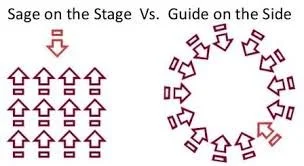
I’m also a different kind of teacher than a priest. I have always seen myself as more of a facilitator than a do it my way kind of teacher. Even when I supervise how to classify expenditures, I always explain why I put it into the category I do and then add something like unless you see it differently, inviting discussion. If priests were the teachers of ancient Israel, they were much more the “here’s the right way to do it” kind of teacher than I have ever been.
It could be argued that I am then more in line with Talmudic teachers who preserve different perspectives on issues, but I’ve just never been drawn to the Talmud—maybe I’m too linear, or some of the issues are too legal or some seem to be missing the point—asking when you should pray the Sh’ma seems to me to be just the wrong starting point. So I can’t find an anchor in the Talmud and the grounding in our Animist ancestors isn’t as firm a ground as I’d like because of all the ways it has been suppressed. All of this is incredibly painful to me, and I touched that pain during the class.
I also got in touch with how reluctant I am to be or see myself as a healer. Before I became a business owner, I was briefly a therapeutic social worker and it was beautiful, confusing, overwhelming, powerful, completely frustrating and crazy making, amongst other adjectives. Business is much simpler, let me assure you. There’s absolutely something there I’m not leaning into and needs to be a focus of some internal work. Why am I so reluctant to be a healer?
Those 10 minutes of visualizing we were in ancient Israel, sitting with these questions and listening to the conversation was so powerful. Ask what is my role in this society? Am I a prophet, priest, healer, some kind of combination, or maybe just a plain Jew who is none of those? How do I carry on this role? How do I feel about the role?